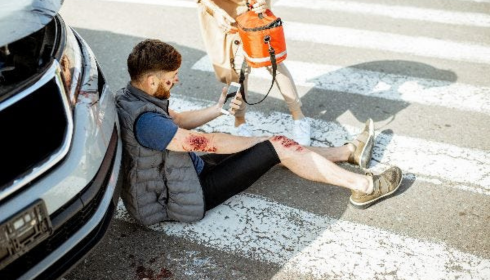
Many people assume that only high-speed crashes cause serious injuries. For pedestrians in Indianapolis, this assumption can be dangerously wrong. Even vehicles traveling at relatively low speeds can cause catastrophic harm when they strike pedestrians. Without any physical protection, pedestrians absorb the full force of impact, often suffering injuries that permanently alter their lives.
Low-speed pedestrian accidents frequently occur in neighborhoods, parking lots, and intersections where drivers believe conditions are safe. These crashes often happen when drivers are distracted, turning, or accelerating from a stop. Many injured pedestrians only begin to understand the seriousness of their injuries after speaking with pedestrian accident lawyers in Indianapolis who recognize how devastating low-speed impacts can be.
Vaughn A. Wamsley regularly represents Indianapolis pedestrians who were struck by drivers traveling at speeds they considered harmless. Understanding why low-speed crashes cause such severe injuries is essential for protecting recovery and long-term stability.
Why pedestrians are so vulnerable to vehicle impacts
Pedestrians have no structural protection against vehicles. Even slow-moving cars carry significant mass and force.
• When a vehicle strikes a pedestrian, the initial impact often occurs at the leg level, causing the upper body to rotate violently onto the hood or windshield. This motion places extreme stress on the spine and head.
• Unlike vehicle occupants, pedestrians cannot rely on seatbelts, airbags, or crumple zones to absorb energy. The human body absorbs most of the force directly.
• Falls following impact often cause secondary injuries as pedestrians strike pavement or nearby objects.
Common low-speed pedestrian crash scenarios
Low-speed pedestrian accidents occur in everyday settings where drivers and pedestrians interact closely.
• Parking lots are a frequent location, especially near grocery stores, hospitals, and apartment complexes throughout Indianapolis. Drivers often focus on finding spaces rather than watching for pedestrians.
• Residential streets see many low-speed crashes when drivers back out of driveways or fail to notice pedestrians crossing mid-block.
• Intersections with stop signs or traffic lights often involve low-speed turns where drivers fail to yield to pedestrians in crosswalks.
Why drivers underestimate low-speed danger
Drivers often underestimate how much damage their vehicle can cause at low speeds.
• Modern vehicles accelerate quickly even at low throttle, increasing impact force.
• Drivers may assume they can stop in time, underestimating reaction distance.
• Distraction reduces awareness, delaying braking even at low speeds.
These factors combine to create dangerous conditions for pedestrians despite low posted speed limits.
Types of catastrophic injuries from low-speed impacts
Low-speed pedestrian accidents frequently cause severe injuries because of how force is transferred.
• Head and brain injuries occur when pedestrians strike the hood, windshield, or pavement. Even mild-looking impacts can cause severe brain trauma.
• Spinal injuries result from sudden twisting or compression during impact and falls. These injuries may lead to chronic pain or permanent impairment.
• Pelvic and leg fractures are common due to bumper-level impact, often requiring surgery and extended rehabilitation.
• Internal injuries may not be immediately visible but can be life-threatening.
Delayed symptom onset after pedestrian accidents
Pedestrians often experience delayed symptoms after low-speed crashes due to adrenaline and shock.
• Headaches, confusion, or memory problems may appear hours or days later.
• Back and neck pain frequently worsens as inflammation increases.
• Bruising and swelling can expand over time, revealing deeper tissue damage.
Emergency rooms throughout Marion County regularly document delayed-onset injuries in pedestrian accident cases, which later become critical when insurers question injury timelines.
Medical treatment timelines for pedestrian injuries
Pedestrian injuries often require prolonged treatment due to their severity.
• Initial emergency care focuses on stabilizing the patient and identifying life-threatening injuries.
• Follow-up appointments may uncover additional injuries once swelling subsides.
• Rehabilitation often includes physical therapy, occupational therapy, and pain management over many months.
Insurance challenges in low-speed pedestrian cases
Insurance companies frequently minimize low-speed pedestrian accidents.
• Adjusters may argue that injuries could not be serious because the vehicle speed was low.
• Insurers often dispute medical necessity for extended treatment.
• Attempts to shift fault to pedestrians are common.
These strategies ignore the physics of pedestrian impacts and the realities of injury progression.
Indiana fault rules and pedestrian claims
Indiana’s modified comparative fault system affects pedestrian accident claims.
• Pedestrians must be less than 51 percent at fault to recover damages.
• Drivers have a duty to exercise reasonable care, even at low speeds.
• Right-of-way laws favor pedestrians in many low-speed scenarios.
Understanding these rules is essential when insurers seek to reduce their liability.
How Indianapolis traffic patterns increase risk
Local traffic patterns contribute to pedestrian injuries at low speeds.
• Dense parking areas downtown and near shopping centers increase vehicle-pedestrian interaction.
• Residential neighborhoods with narrow streets reduce visibility.
• Areas near hospitals, schools, and transit stops see frequent pedestrian traffic.
These environments make low-speed crashes both common and dangerous.
The role of evidence in low-speed cases
Evidence is critical to demonstrating injury severity in low-speed pedestrian accidents.
• Medical records document how injuries developed and worsened.
• Surveillance or traffic camera footage can show impact dynamics.
• Witness statements help counter claims that the pedestrian was careless.
Clear documentation strengthens claims when insurers downplay injury severity.
Long-term consequences of pedestrian injuries
Low-speed pedestrian injuries often lead to lasting effects.
• Chronic pain and mobility limitations may persist long after healing.
• Time away from work can create financial hardship.
• Emotional trauma may affect confidence and independence.
These long-term consequences often surprise injured pedestrians and their families.
How Marion County courts view low-speed pedestrian cases
Marion County courts recognize that low-speed impacts can cause serious harm. Judges and juries rely heavily on medical evidence and expert testimony regarding injury mechanisms.
Consistent documentation and credible explanations of injury progression are key factors in these cases.
Steps pedestrians should take after a low-speed crash
Early action helps protect health and recovery.
• Seek immediate medical evaluation, even if injuries seem minor.
• Request a police report documenting speed and location.
• Photograph the scene, vehicle, and injuries.
• Track symptoms and treatment over time.
Why early guidance matters after a pedestrian accident
Low-speed pedestrian accidents are often misunderstood and undervalued. Early guidance helps injured pedestrians avoid mistakes that weaken claims.
Vaughn A. Wamsley helps Indianapolis pedestrians ensure their injuries are taken seriously and adequately documented. When a low-speed crash causes serious harm, speaking with pedestrian accident lawyers in Indianapolis can help protect your health, your rights, and your future.